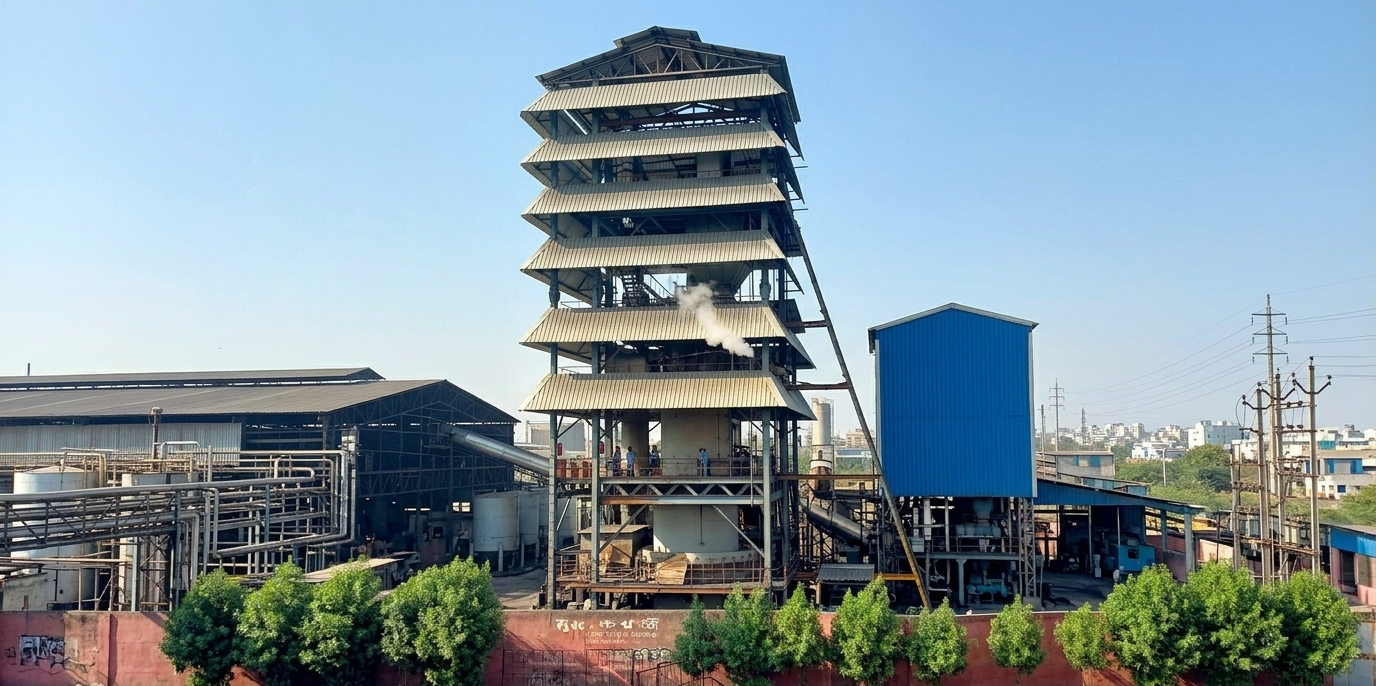
According to IEA estimates, heat contributes about 40% of global CO2 emissions. About 50% of total heat produced was used for industrial processes. High temperature industrial heating is considered one of the “difficult to decarbonize” sectors.
COSMO Powertech offers matured technology (TRL 9) to substitute fossil fuels in industrial heating processes, including high temperature industrial heating.
Fuel flexible COSMO gasifiers can convert a wide range of renewable solid fuels into producer gas, such as:
- Briquetted agricultural or agro-industrial wastes
- Forestry wastes
- Wood from energy plantations
- Bamboo
- Briquetted RDF
Producer gas generated from above renewable fuels can substitute any of the fossil fuels, such as:
- Liquid fuels like, furnace oil, LSHS, LDO, diesel
- Petroleum derived gaseous fuels like LPG, natural gas.
- By-product gaseous fuels like coke-oven gas or blast furnace gas
- Solid fuels (e.g. coal) in lump form
- Pulverized coal (PCI) or pet coke
Industrial heating applications
Almost any industrial heating process can deploy gasifiers to reduce CO2 emissions. Some of the examples are:
- Metal reheating for rolling / forging
- Iron ore pellet induration
- Melting of non-ferrous metals
- Dryers & hot air generators
- Rotary kilns
- Heat treatment
- Glass melting
- Boilers
- Galvanizing
- Chemical reactor heating
- Vertical shaft kilns
- Tunnel kilns
The above list is only indicative. You may talk to us with your process details for customised solution.
Additional benefits
In addition to reduction of CO2 emissions, biomass gasifiers enable:
- Reduction in sulphur emissions when substituting coal or furnace oil
- Better combustion control and higher efficiency as compared to solid or liquid fuel firing
- Lower particulate emissions
IC engines, presently consuming fossil fuels (diesel, LDO, FO or natural gas) can also use producer gas generated from renewable fuels for decarbonization or fuel cost reduction.